UX/ UI /Strategy / 2026
Aether OS
Brand strategy and identity direction for Aether, a pre-seed likeness-intelligence platform that finds every place a creator's face and voice appears online — AI clones, reposts, remixes, derivatives — and attaches revenue estimates to unauthorized uses. I defined the brand foundation, visual system, and product UX direction for a category that didn't exist yet.
The challenge
Generative AI made every creator's likeness reproducible at scale, and nothing helped them see where they were showing up — let alone what it was worth. The founding team had detection technology but no brand: no locked name, no positioning, no visual language, and a product surface that read as a utility instead of an authority. They needed an identity that could speak to creators and investors simultaneously, before a single line of marketing existed.
The insight
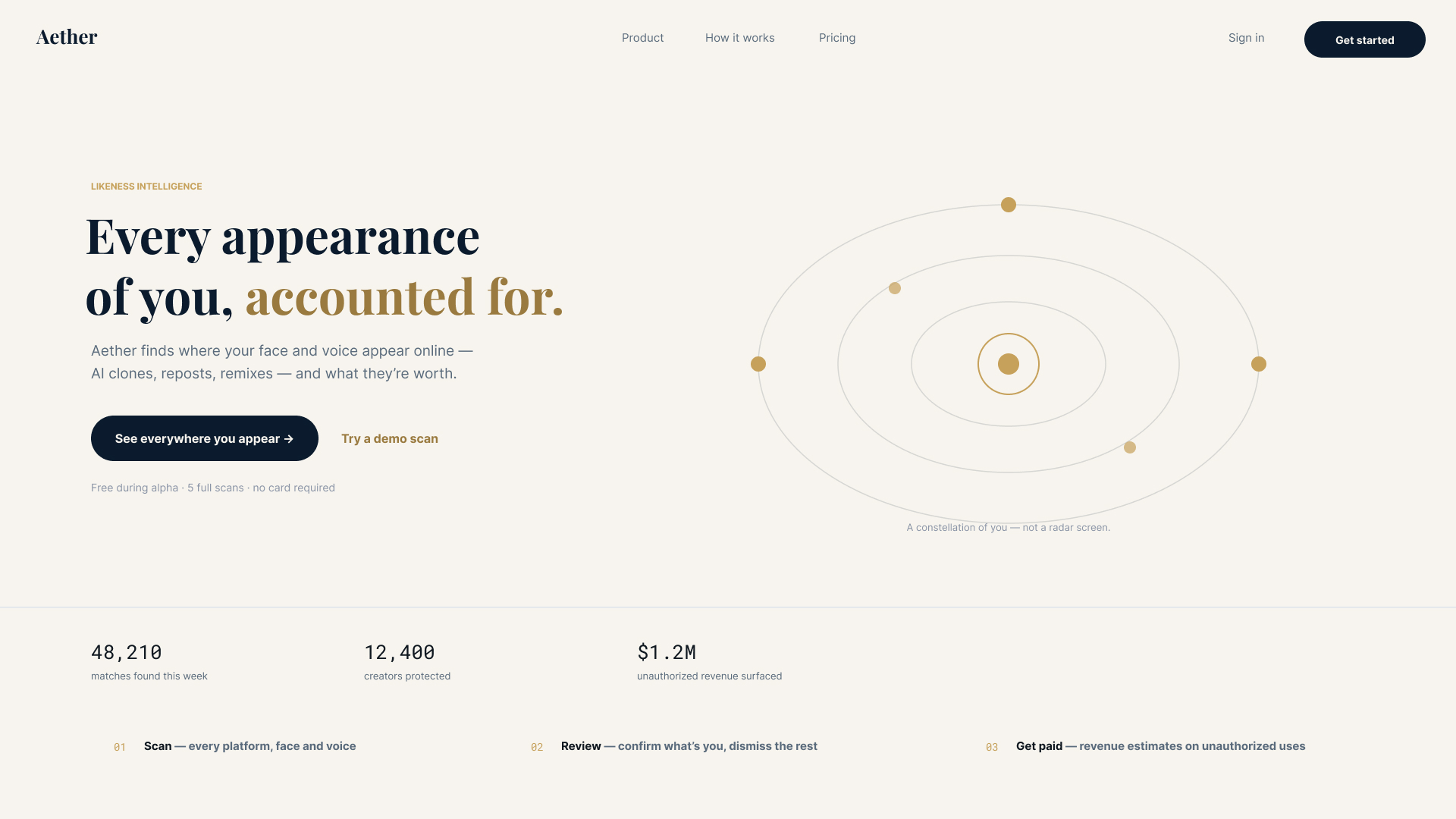
Creators don't need another alarm bell about AI theft — they need a ledger. The conversation around likeness rights was either alarmist or purely legalistic, and neither earns a creator's trust. The insight: sovereignty sells better than fear. Position the product as a guardian, not a warning system — the calm, authoritative record of every appearance of you, accounted for.
The idea
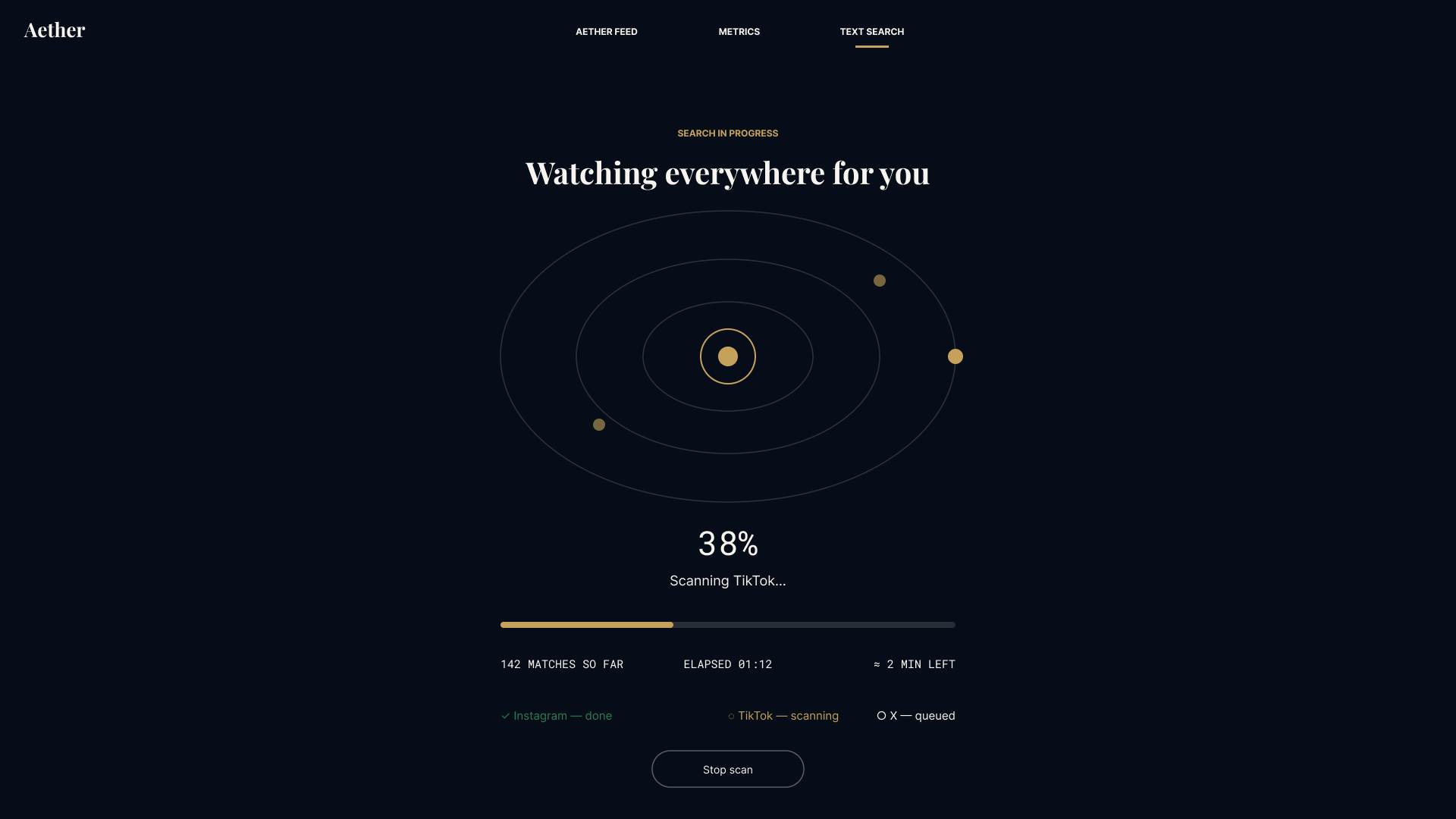
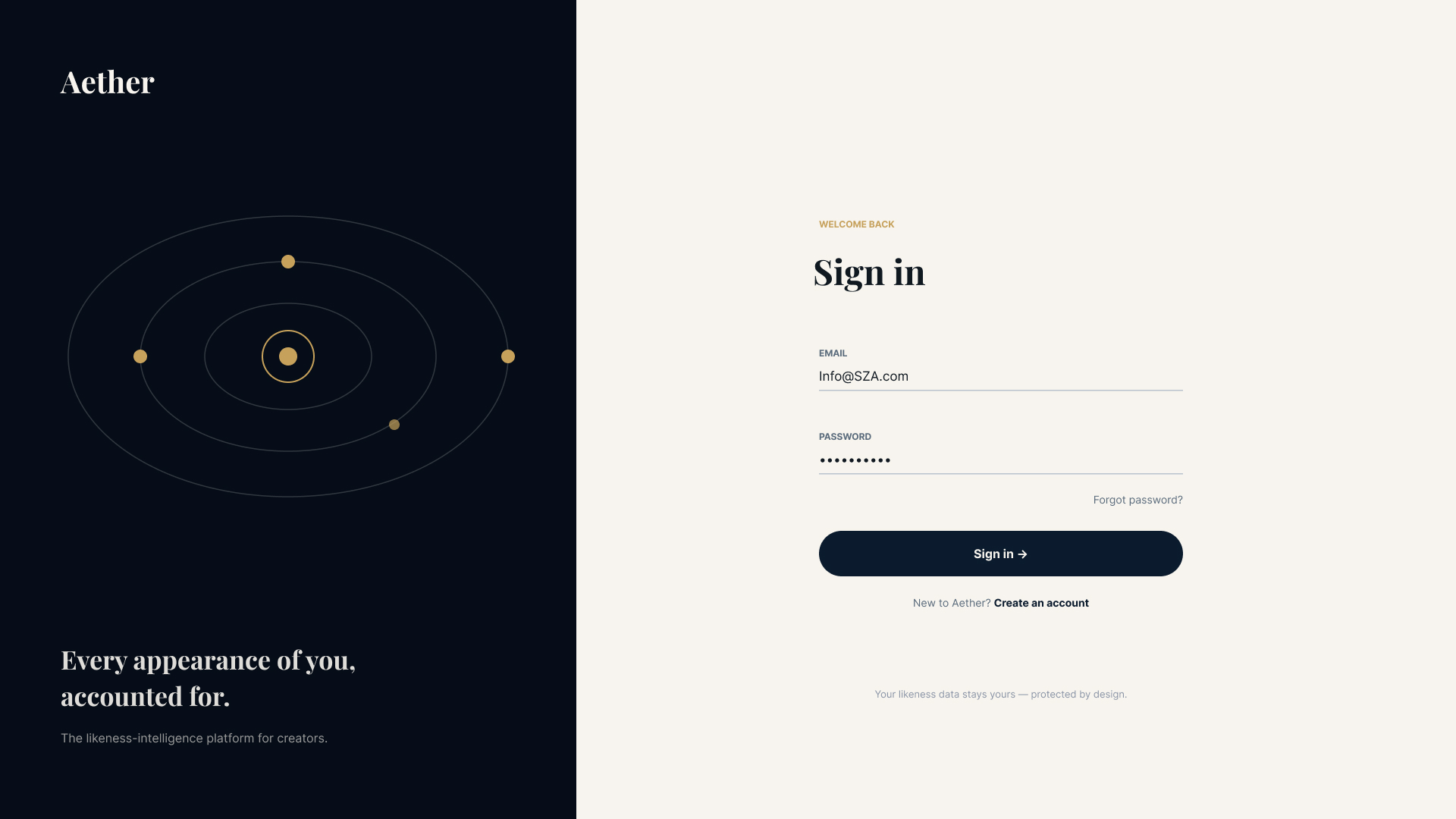
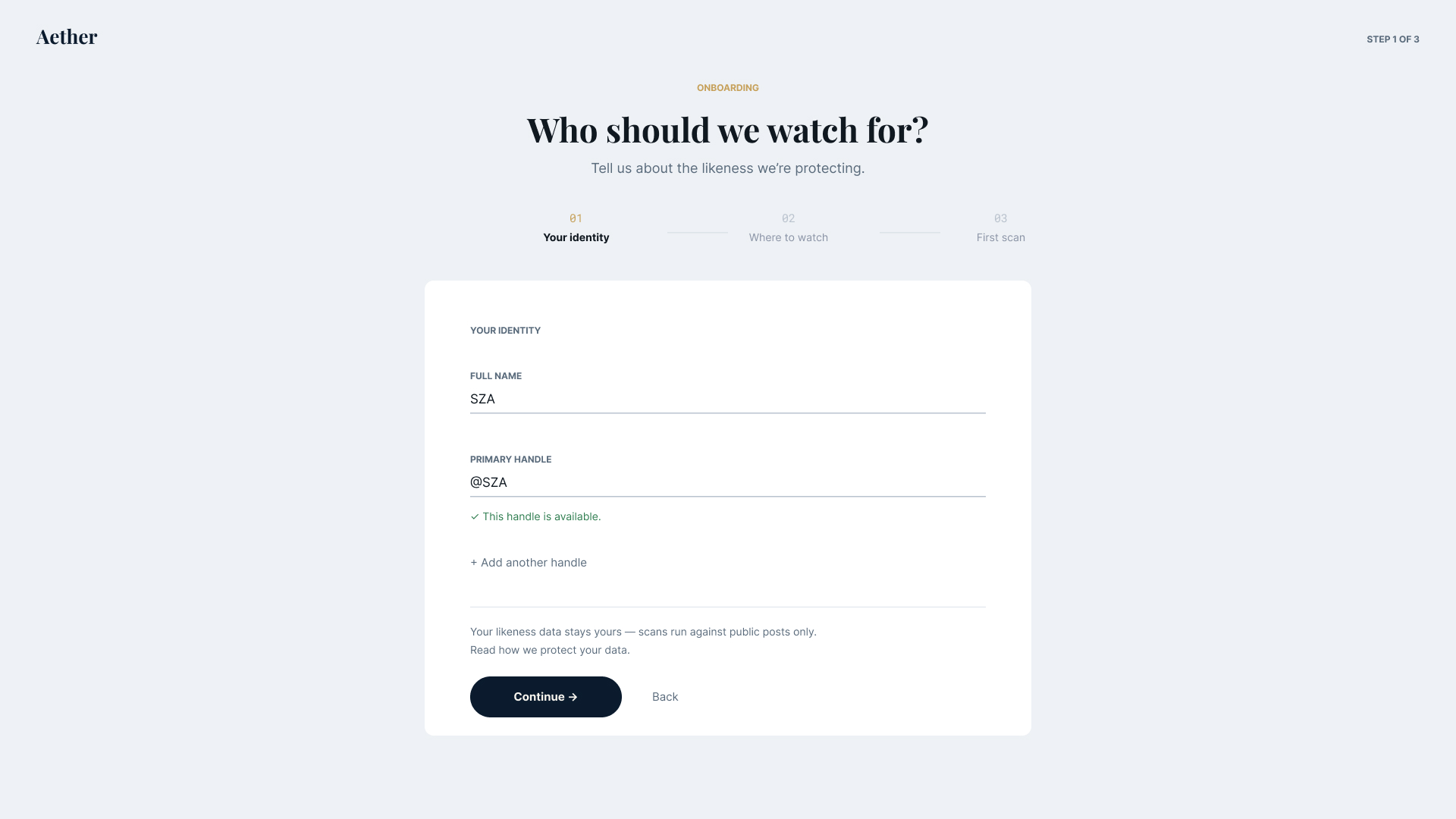
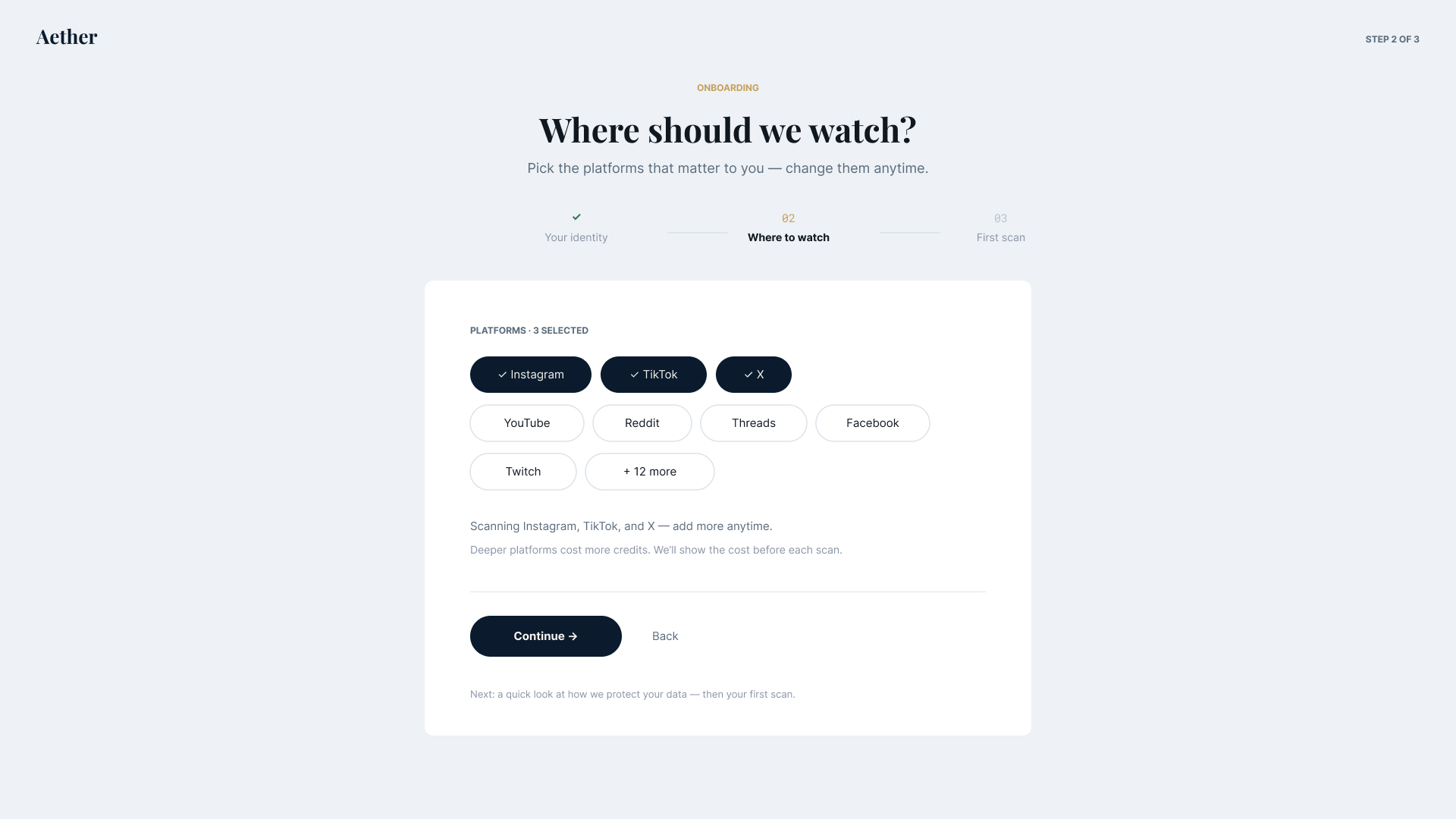
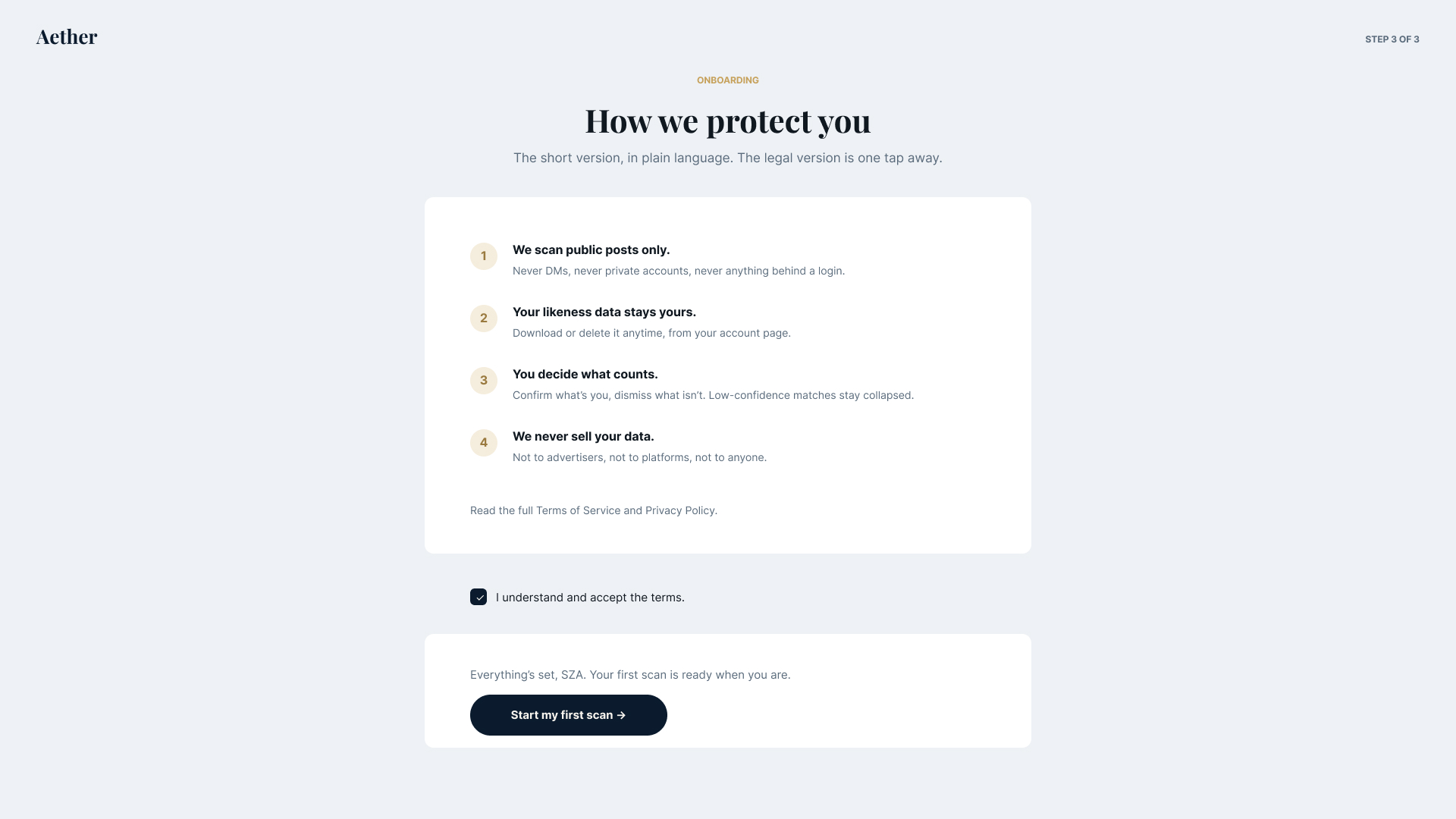
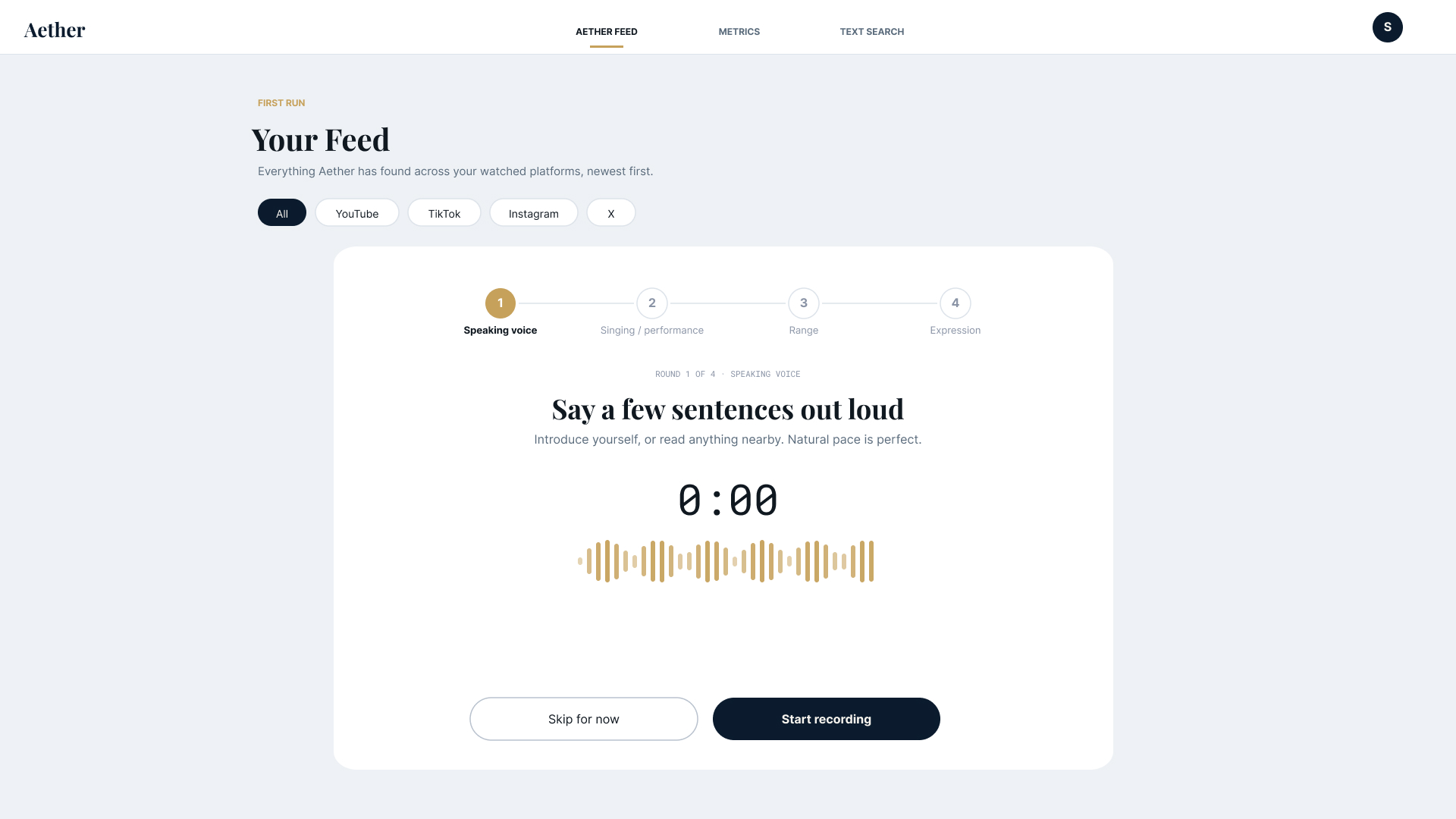
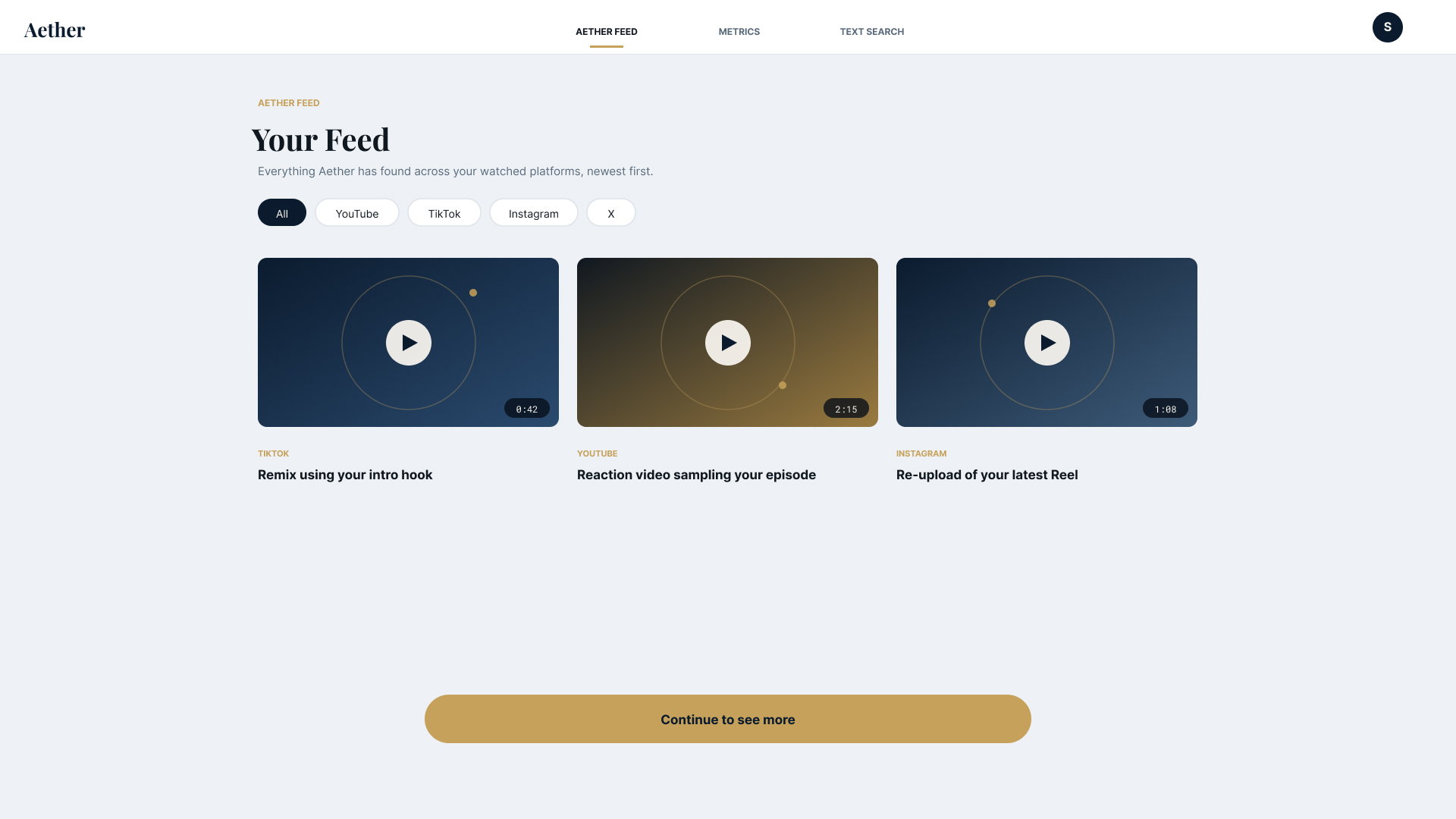
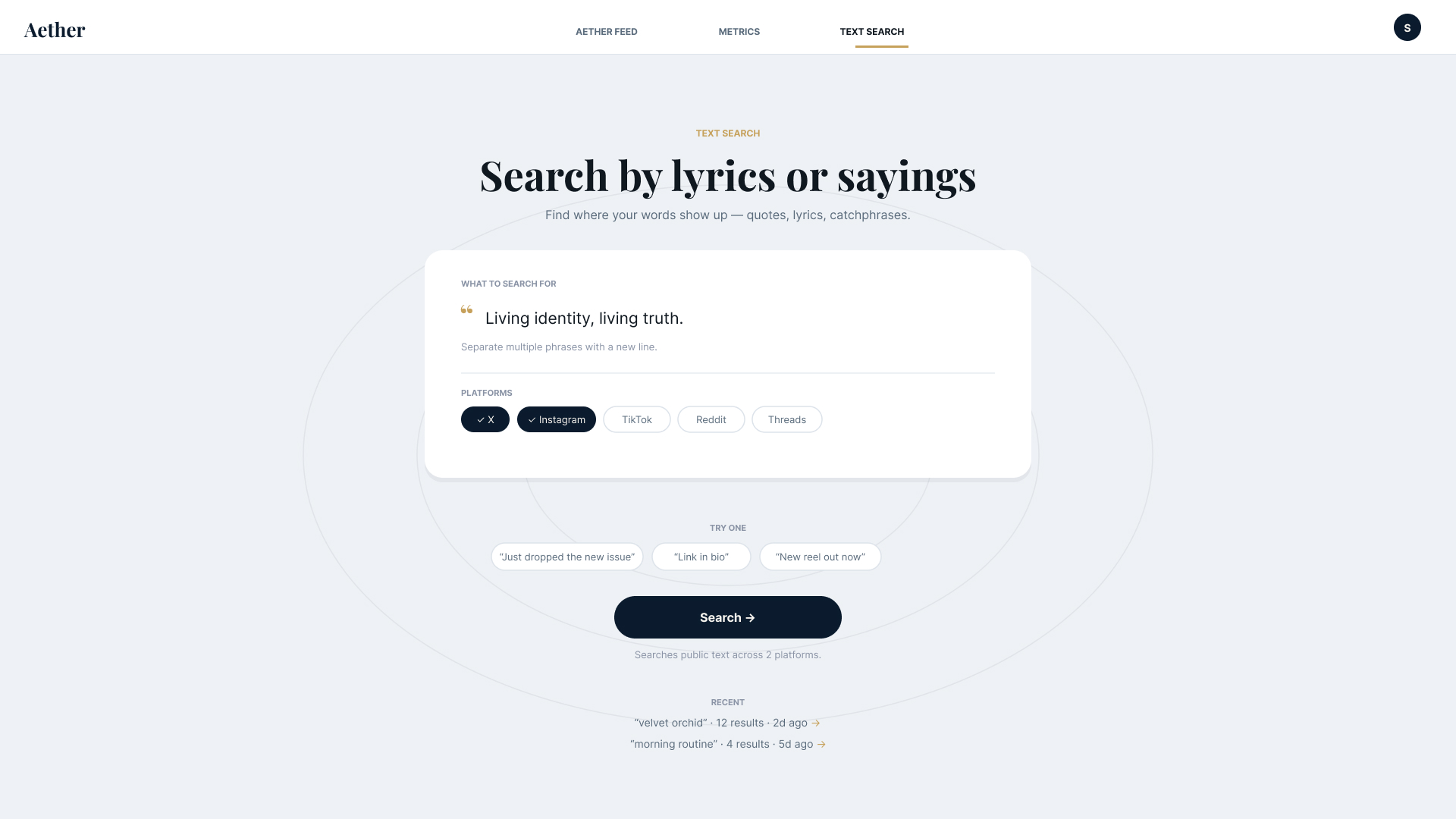
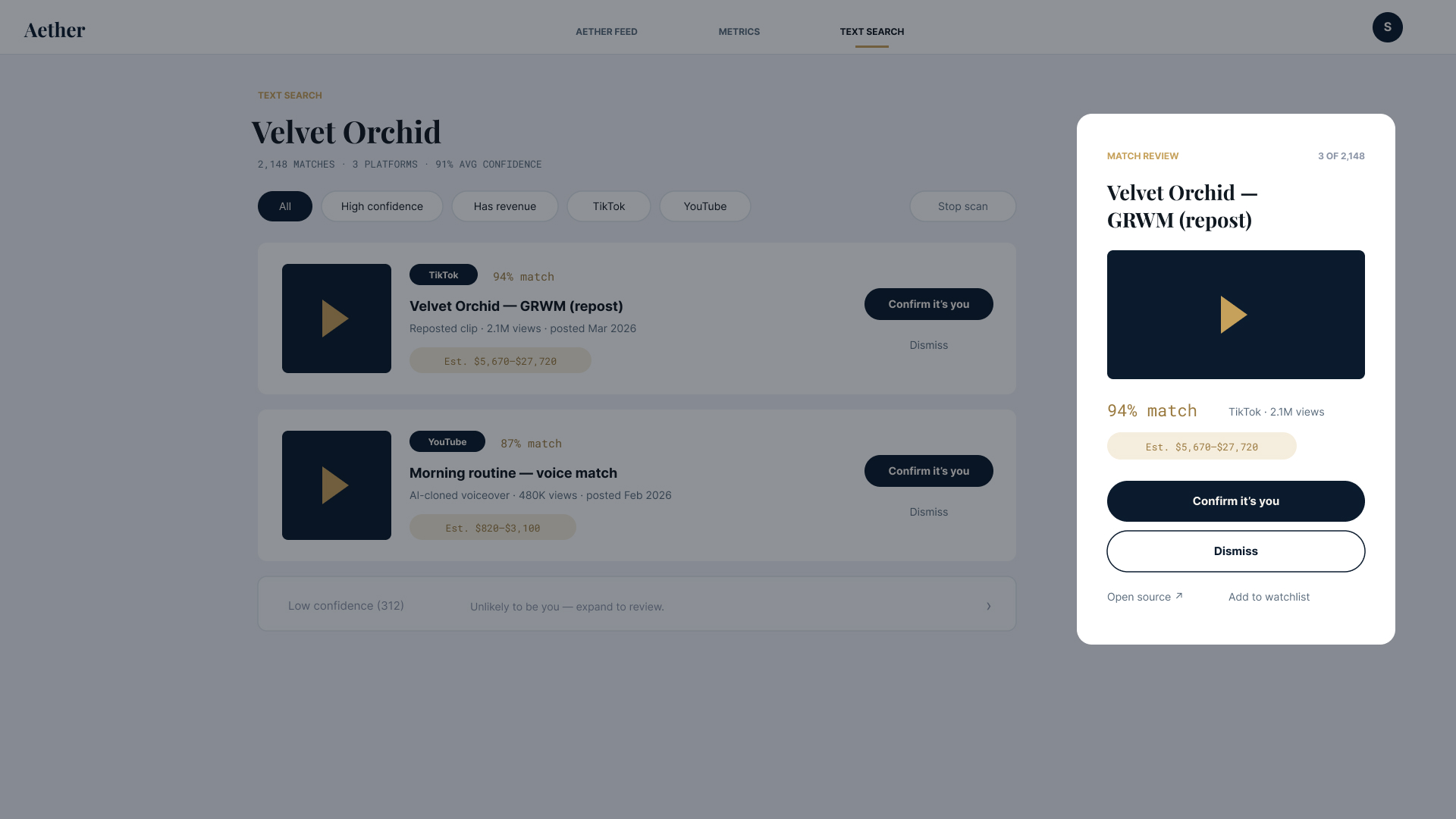
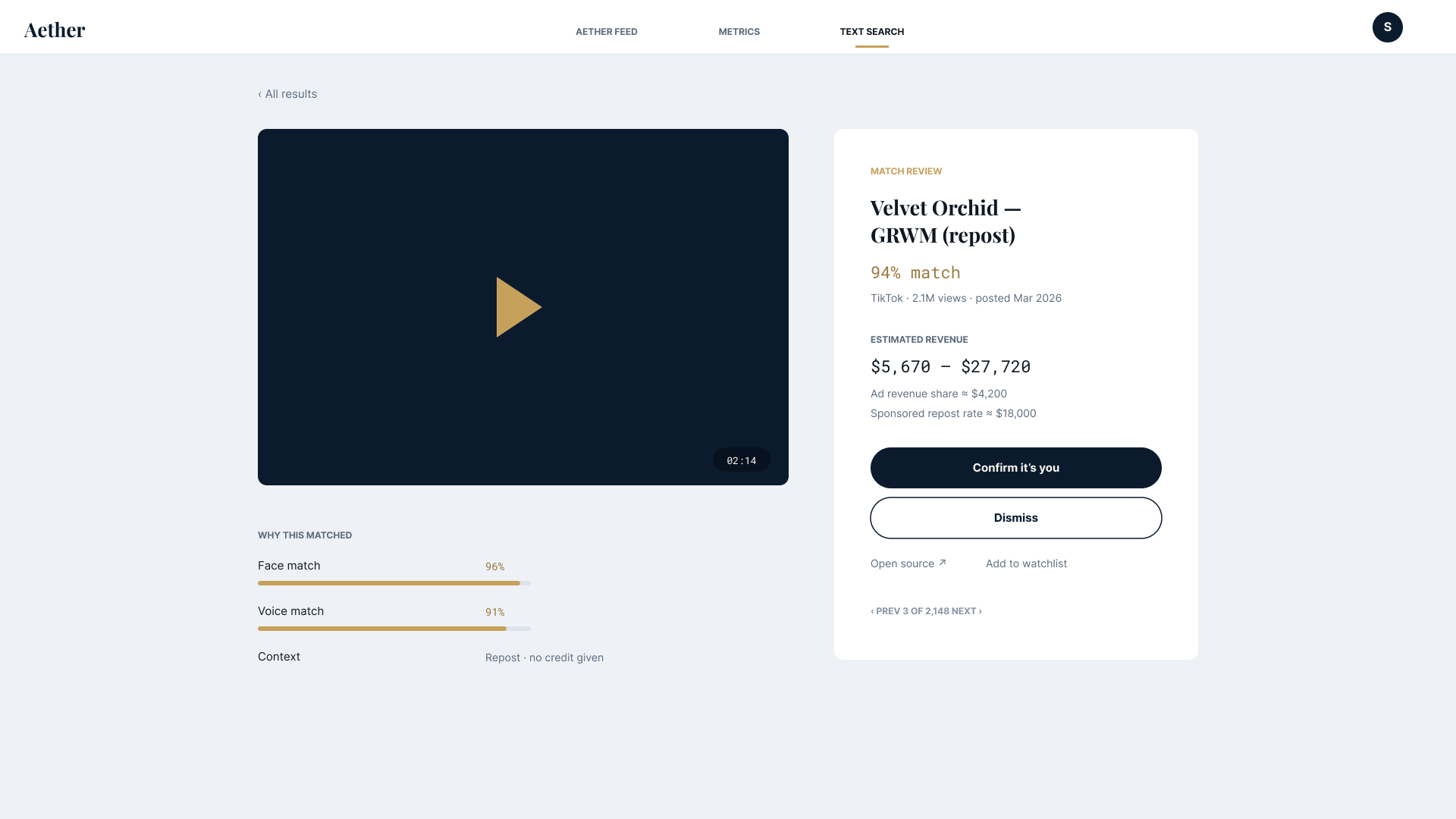
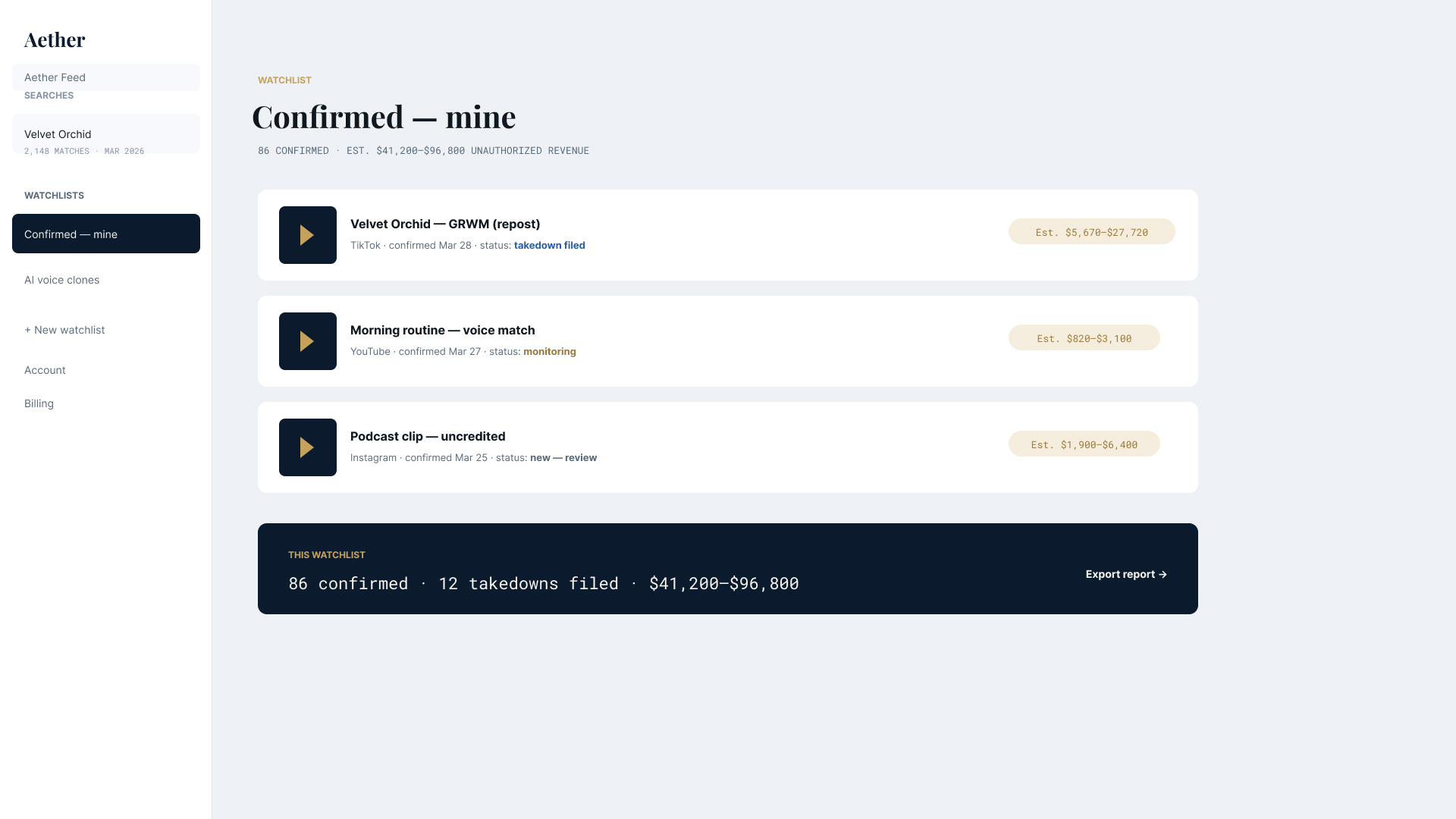
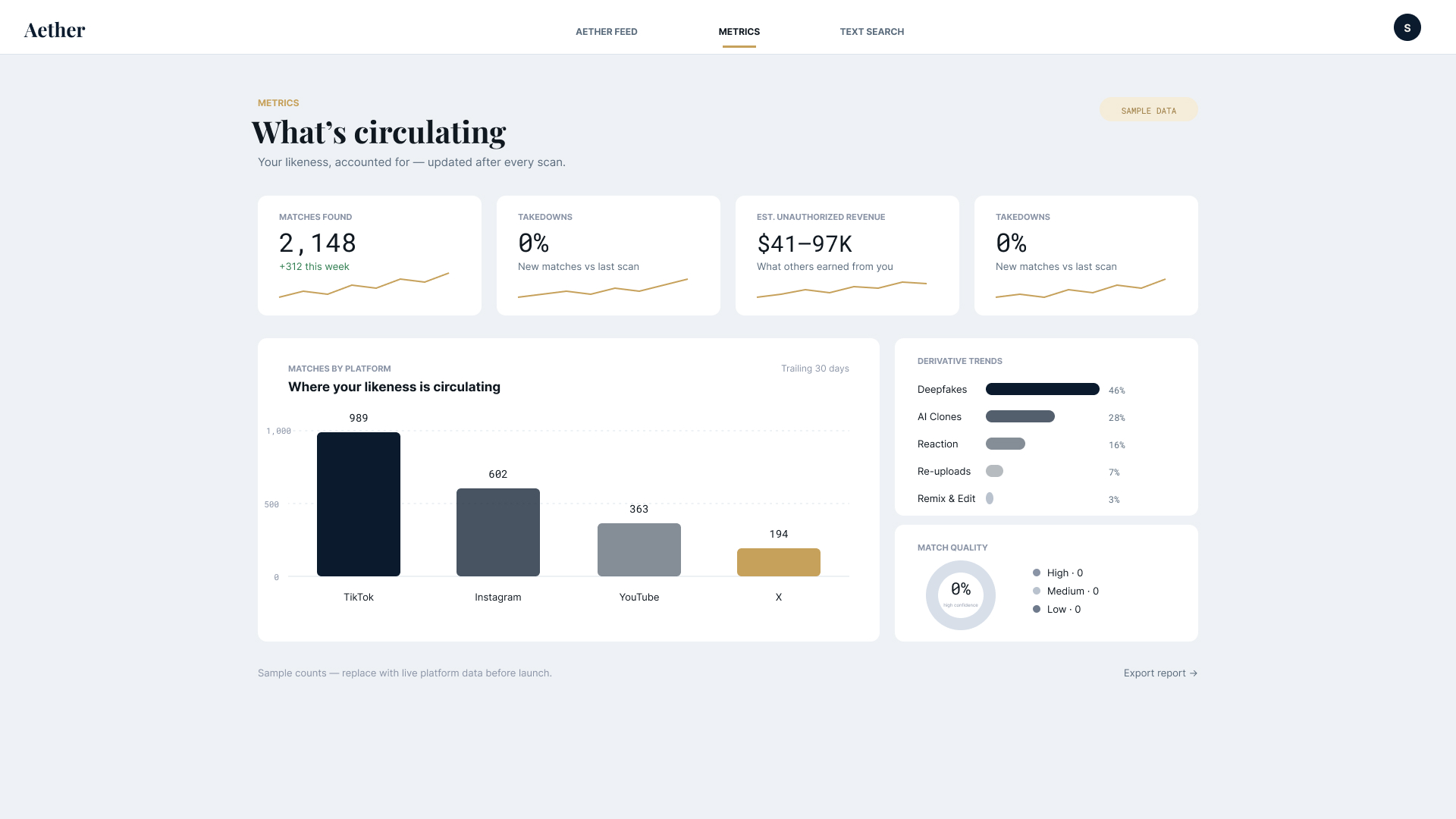
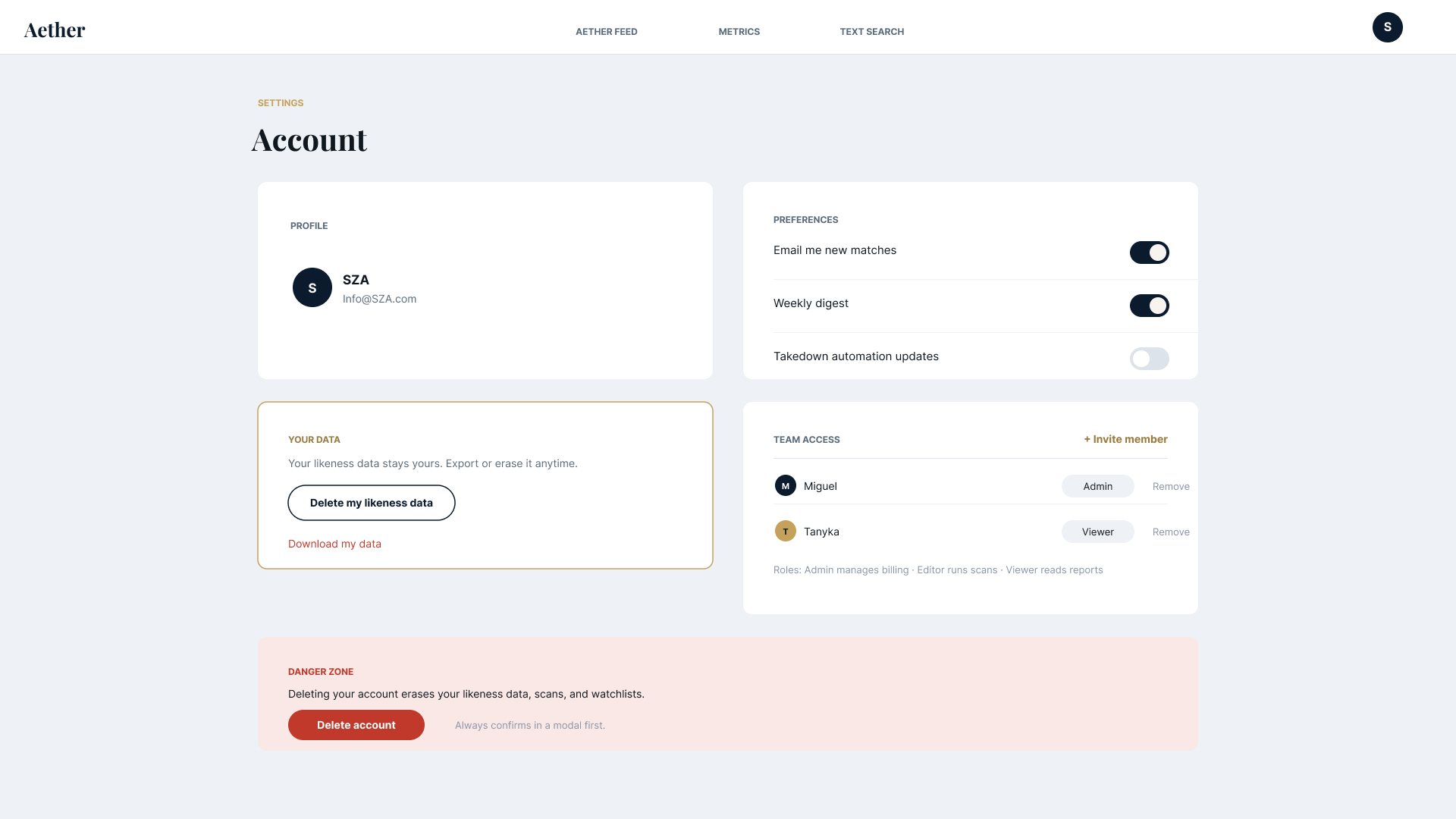
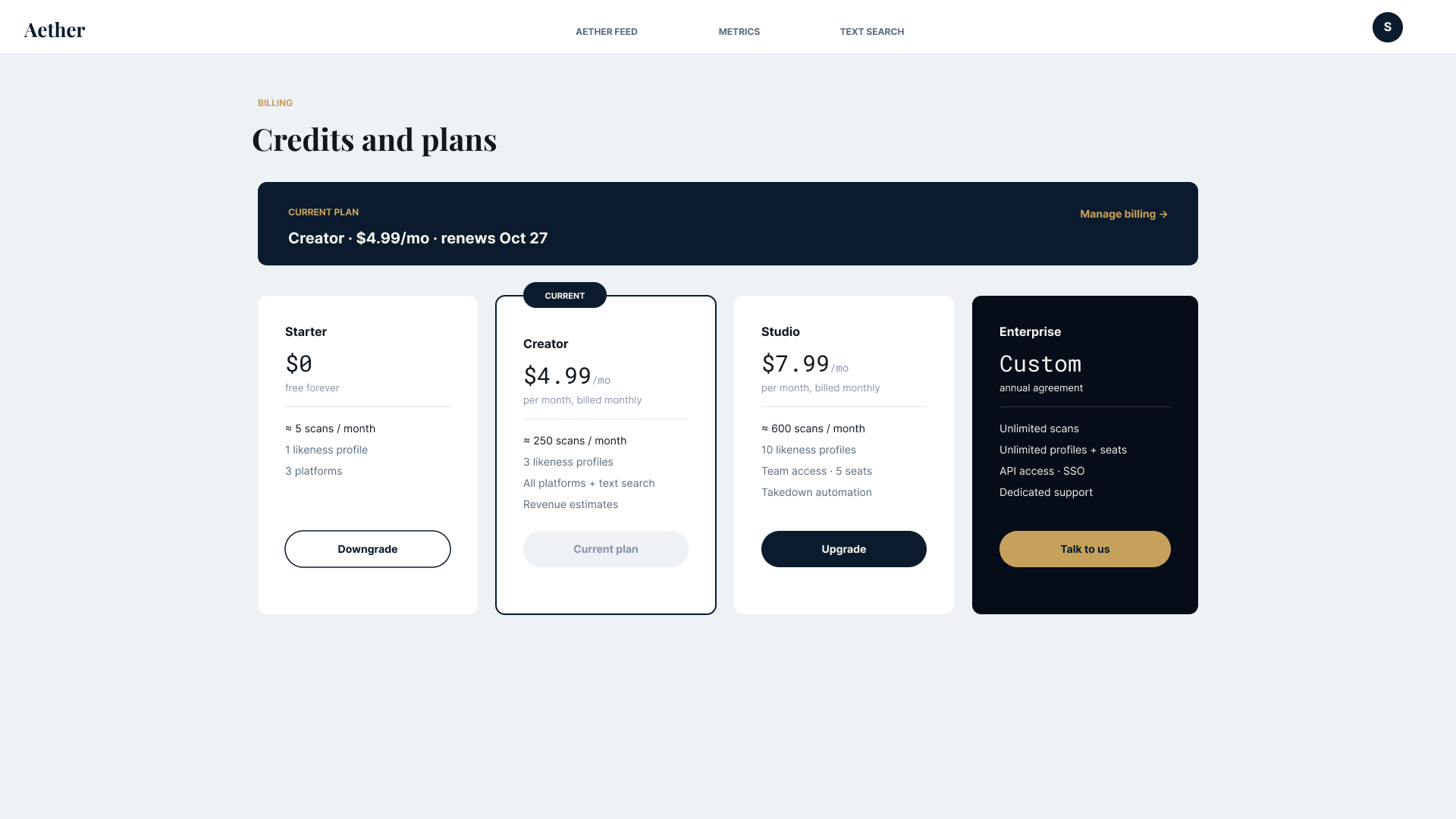
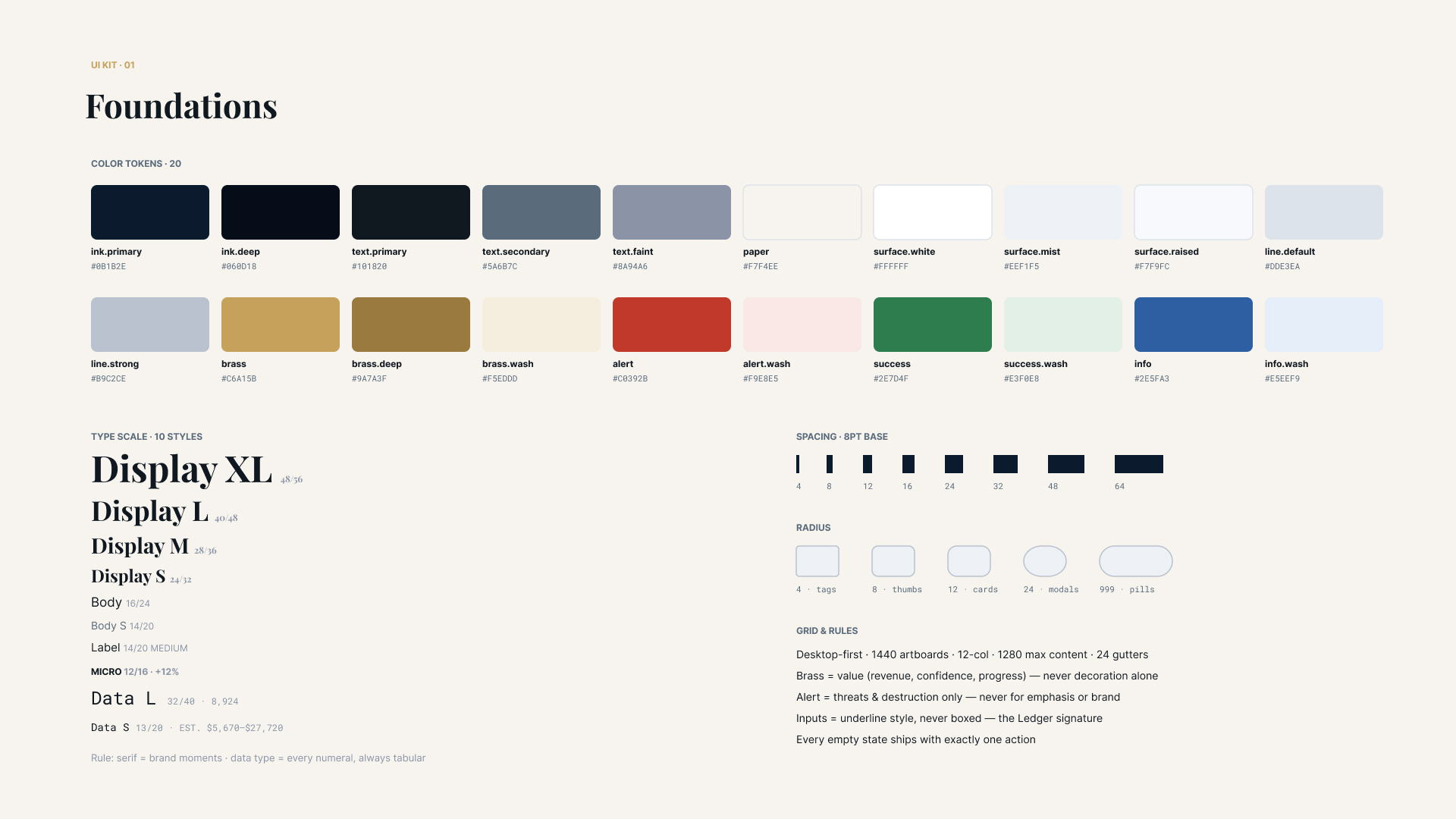
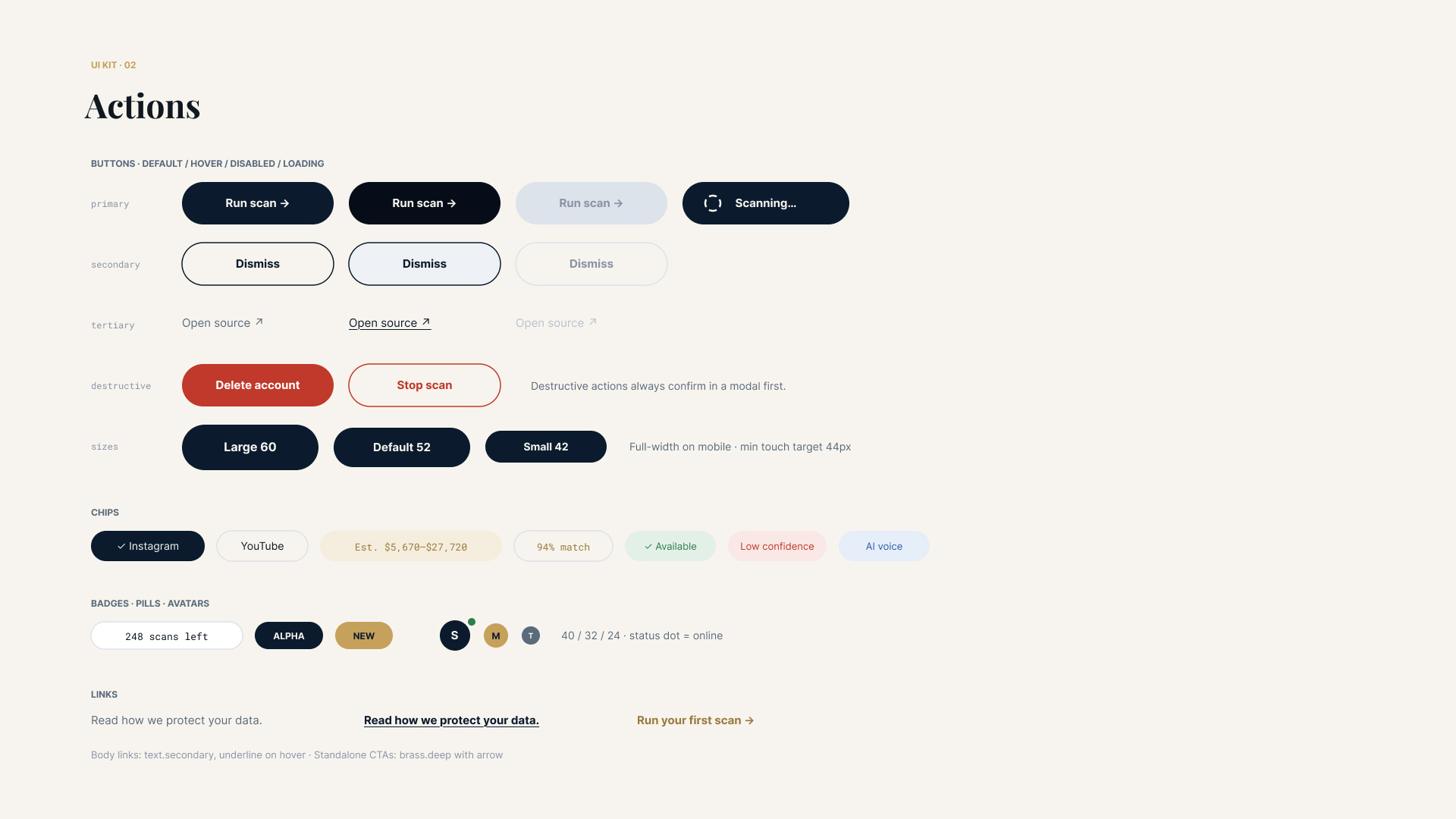
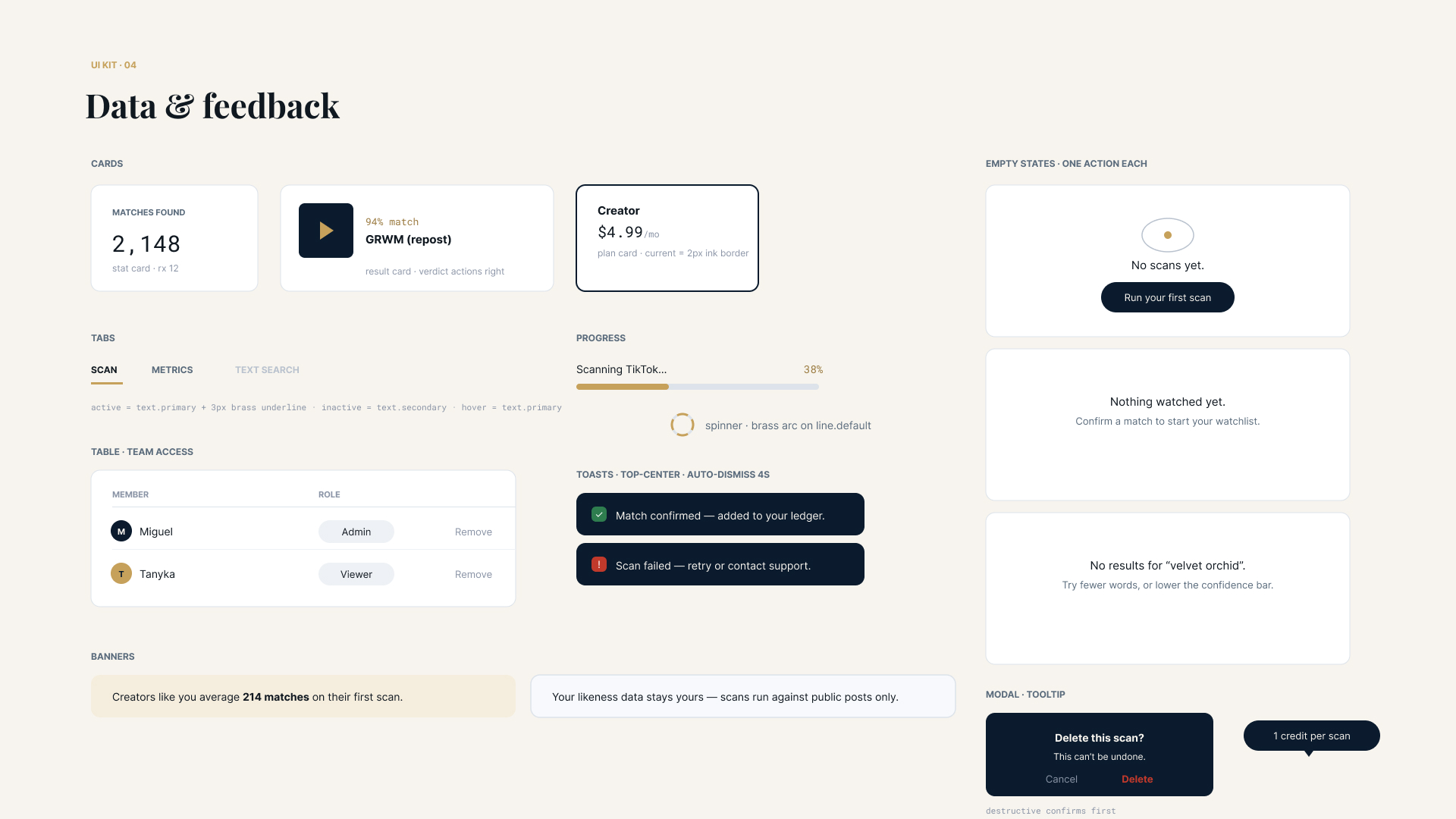
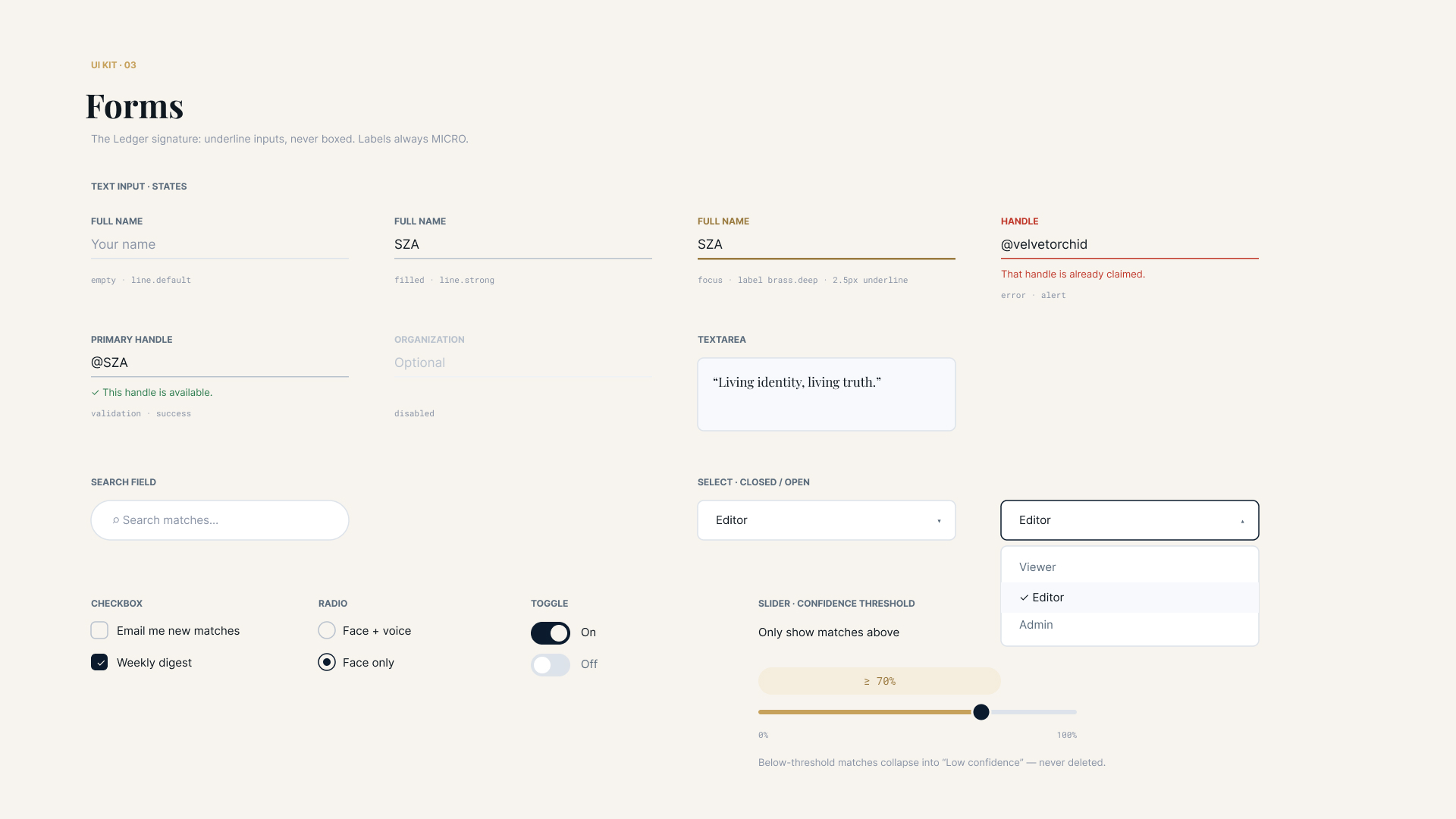
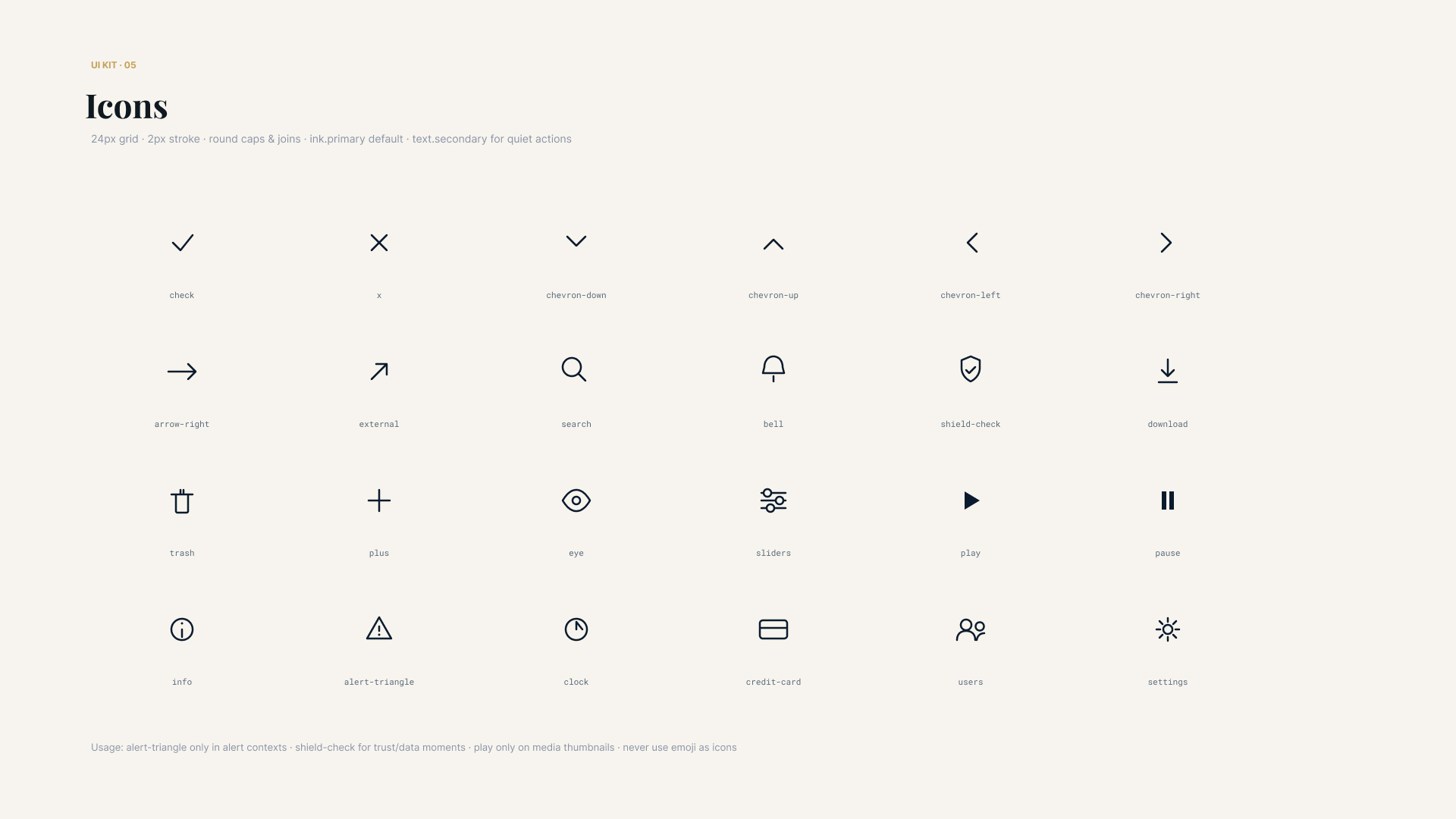
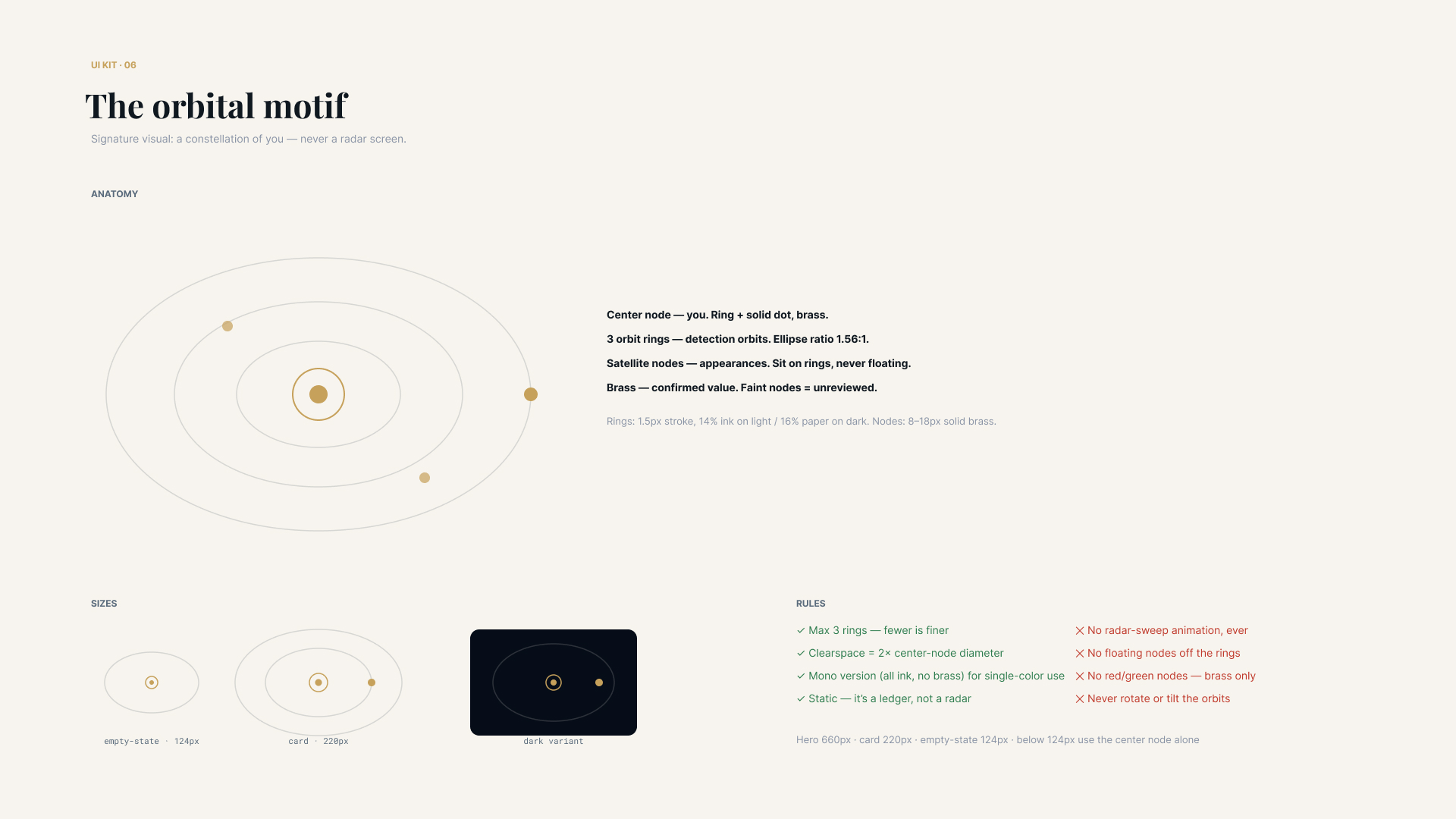
I built the brand around one idea — "Every appearance of you, accounted for" — and a visual system called The Ledger: ink-navy, paper, and brass, carrying the weight of a financial instrument rather than a tech startup. Text search, the product's key interaction, received flagship treatment distinct from the rest of the UI. I directed the product UX across the 15-screen journey to an enterprise, client-viewing bar — consistent typography, zero decorative noise — and delivered a client-ready 10-slide brand identity deck plus a brand-rationale one-sheeter, with screens packaged as Figma-ready SVGs.
The result
The engagement closed with an approved brand foundation: locked name, positioning, visual route, and a deck the team could put in front of investors as-is. Aether left with a category-defining narrative — not AI detection tooling, but likeness intelligence as an asset class creators can audit. The identity system was built to scale from pitch deck to product without losing its authority.